D#7 Ukulele Chord
A warm, slightly exotic dominant seventh built from D#, G, A#, and C#. It naturally resolves toward G#, and shows up in bluesier and jazzier tunes as a colorful V chord that craves release.
Also known as
- Eb7
- D# 7
- Eb 7
- D#dom7
- Ebdom7
- D# dom7
- Eb dom7
- E-flat7
- D-sharp7
- E-flat 7
- D-sharp 7
- E-flatdom7
- D-sharpdom7
- E-flat dom7
- D-sharp dom7
- D# dominant 7th
- Eb dominant 7th
- D# dominant seventh
- Eb dominant seventh
- E-flat dominant 7th
- D-sharp dominant 7th
- E-flat dominant seventh
- D-sharp dominant seventh
How to Play This Chord
Position your fingers on the fretboard as shown in the diagram. The vertical lines represent the four strings, from the top G string (left) to the A string (right), and the horizontal lines are the frets. Numbers inside the dots indicate which finger to use: 1 (index), 2 (middle), 3 (ring), 4 (pinky). An X means don't play that string; an O means play it open. A bar spanning multiple strings means one finger presses across all of them at once — this is known as a barre chord.
Tips & Tricks
Set a flat index-finger barre across the G, C, and E strings at the third fret, then place your middle finger on the A string at the fourth fret. Higher up the neck the frets sit closer together, so a barre here is a touch easier; just keep steady pressure and let your wrist drop forward.
There are many ways to play this chord. Try these:
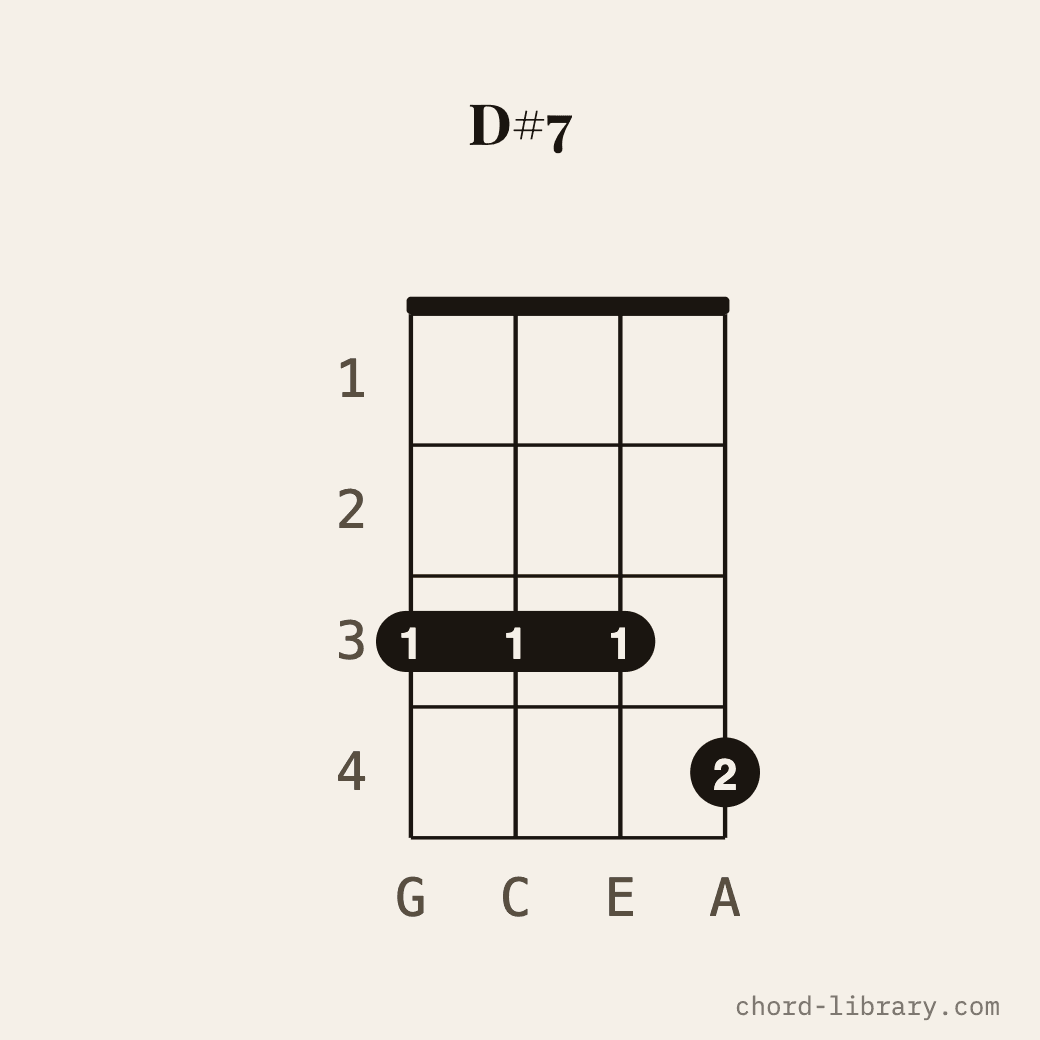
Download this chord chart
Save the diagram as a high-resolution image — perfect for printing, sharing, or your practice notes.
Download PNG