C#dim Ukulele Chord
Built from C#, E and G, this diminished triad carries a dark, hollow tension that never sounds resolved. Its stacked minor thirds keep it unstable, so it usually acts as a passing chord steering toward the next harmony in jazz, classical and moody pop.
Also known as
- C#°
- Db°
- C# °
- Db °
- Dbdim
- C# dim
- Db dim
- D-flat°
- C-sharp°
- D-flat °
- C-sharp °
- D-flatdim
- C-sharpdim
- D-flat dim
- C-sharp dim
- C#diminished
- Dbdiminished
- C# diminished
- Db diminished
- D-flatdiminished
- C-sharpdiminished
- D-flat diminished
- C-sharp diminished
How to Play This Chord
Position your fingers on the fretboard as shown in the diagram. The vertical lines represent the four strings, from the top G string (left) to the A string (right), and the horizontal lines are the frets. Numbers inside the dots indicate which finger to use: 1 (index), 2 (middle), 3 (ring), 4 (pinky). An X means don't play that string; an O means play it open. A bar spanning multiple strings means one finger presses across all of them at once — this is known as a barre chord.
Tips & Tricks
It's the same cramped four-finger block as C dim, just one fret higher around the third fret: pinky on the G string, middle on the C string, index on the E string, ring on the A string. Press on your fingertips so nothing buzzes, and remember this movable shape can be slid anywhere up the neck to make other diminished chords.
There are many ways to play this chord. Try these:
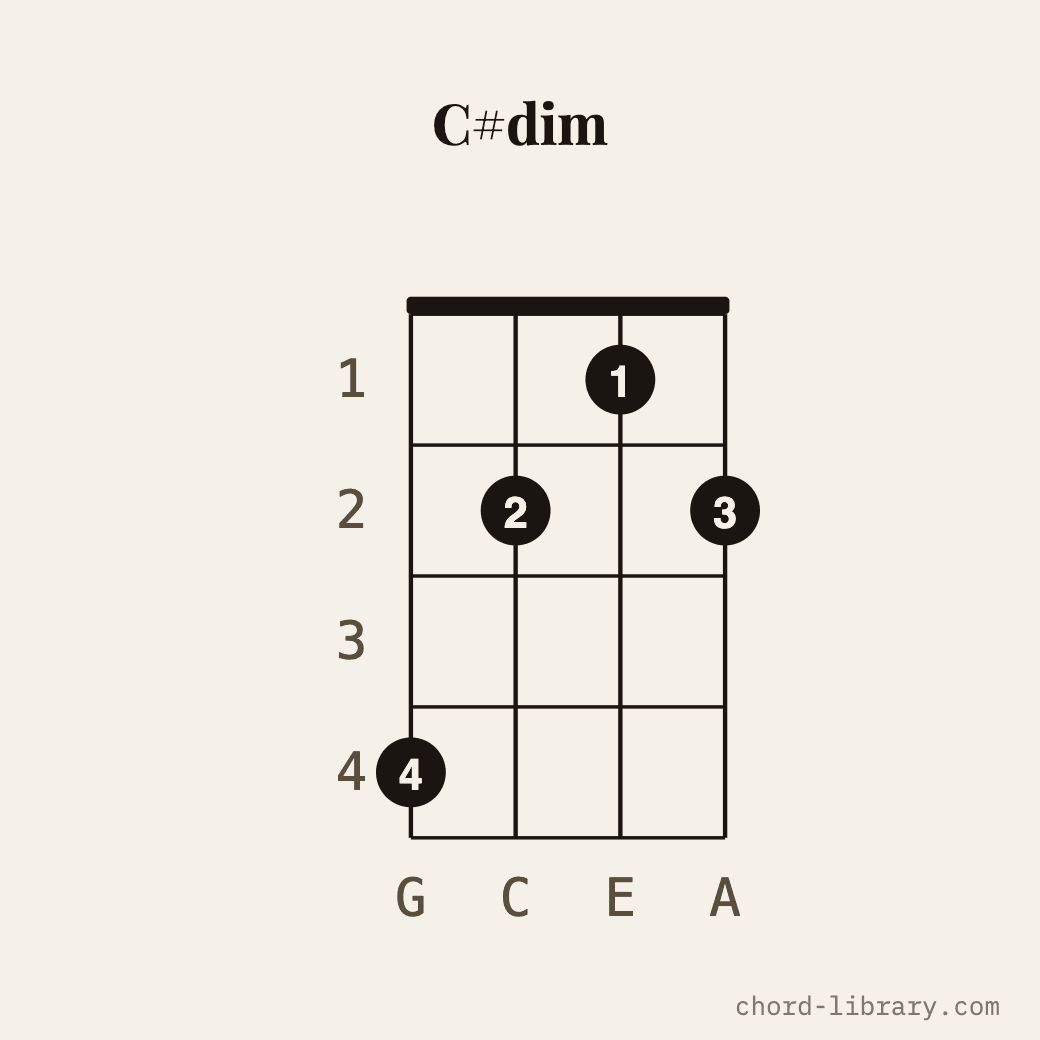
Download this chord chart
Save the diagram as a high-resolution image — perfect for printing, sharing, or your practice notes.
Download PNG